
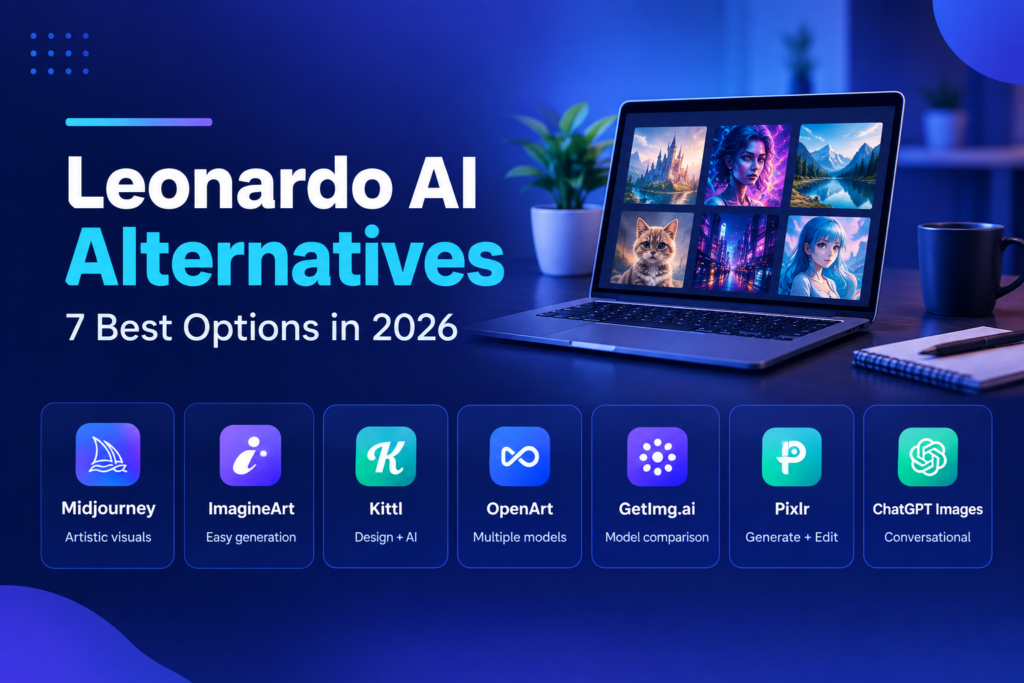
Leonardo AI Alternatives: 7 Best Options in 2026

Leonardo AI is one of the strongest all-in-one AI image platforms available, but it isn’t the right fit for everyone. Maybe you want a different art style, a simpler interface, more editing options, access to multiple AI models, or a tool that better fits your budget. The good news is that there are several strong Leonardo AI alternatives worth considering. Here are seven AI image generators and creative platforms that offer something different from Leonardo AI — and what each one does best. Quick Comparison Tool Best For Free Plan? Standout Feature Midjourney Highly stylized, artistic images No regular free plan Distinctive visual style ImagineArt Fast, beginner-friendly generation Yes Simple workflow and multiple creative tools Kittl Design-focused graphics Yes AI and design tools together OpenArt Exploring models, styles, and prompts Yes Large creative tool library GetImg.ai Comparing multiple AI models Check current plan Multiple image and video models Pixlr AI generation and editing Yes AI tools plus photo editing ChatGPT Images Conversational image creation and editing Availability varies by plan Natural-language image creation and editing 1. Midjourney Midjourney is one of the best-known names in AI image generation, especially for users who want highly stylized and visually striking results. Its images often have a distinctive artistic look with strong composition, lighting, and detail. It can be a great choice when you want impressive results without spending too much time adjusting technical settings. Best for: Artists, creators, and users who want a strong artistic style. Trade-off: Midjourney does not have a regular free plan on its website or Discord. Standard plans are paid subscriptions, while limited trial access may be available through the niji · journey mobile app. Read our Leonardo AI vs Midjourney comparison → 2. ImagineArt ImagineArt focuses on making AI creation accessible through a relatively straightforward workflow. It supports image generation as well as other creative features, making it useful for people who want to experiment without dealing with a complicated setup. Its free access allows users to try the platform, while paid plans provide additional models, credits, and creative features. Best for: Beginners and creators who want simple AI image generation with additional creative tools. Trade-off: Users who need a wider selection of advanced models and controls may prefer a more specialized platform. Read our full ImagineArt review → 3. Kittl Kittl takes a different approach from traditional AI image generators. Instead of focusing only on creating standalone images, it combines AI features with templates, graphic design tools, typography, mockups, and other design resources. That makes it particularly useful for creating posters, social media graphics, merchandise designs, branding materials, and other visual content. Kittl offers a free plan, while paid plans provide additional AI credits, premium templates, higher-resolution exports, and other features. Best for: Designers, marketers, and creators working on branded visual content. Trade-off: Kittl is more design-focused than a pure AI art generator, so it may not be the first choice for users who only want highly artistic or experimental images. Read our full Kittl review → 4. OpenArt OpenArt is a strong Leonardo AI alternative for users who like experimenting with different AI models, styles, and creative workflows. The platform provides access to a wide range of image, video, and creative tools, along with features for image editing and character consistency. Its free access allows users to try the platform before moving to paid plans, although some advanced features may require a paid plan. Best for: Users who want to explore different AI models, styles, and creative workflows. Trade-off: The large number of models and options can feel overwhelming if you simply want to create one image quickly. Read our full OpenArt review → 5. GetImg.ai GetImg.ai is designed around access to multiple AI models in one place. Instead of switching between different platforms, users can work with different image and video models from a single interface. This makes it particularly useful when you want to compare how different models respond to the same prompt. Best for: Creators who want to compare multiple AI models in one platform. Trade-off: Having many models and settings available can create a learning curve for beginners. Its pricing and available credits can also vary by plan. 6. Pixlr Pixlr combines AI image generation with traditional photo-editing tools. This makes it useful when your workflow involves both creating an image and making changes to it afterward. You can generate an image from a text prompt and then continue editing it with tools such as generative fill, background removal, image expansion, resizing, and other editing features. Pixlr offers free access to some AI tools, while paid plans provide additional AI credits and features. Best for: Users who want AI generation and photo editing in the same platform. Trade-off: Its AI generation tools are less focused on one specific artistic workflow than dedicated AI-first image platforms. 7. ChatGPT Images ChatGPT Images is a useful alternative for people who prefer creating and editing images through natural language. Instead of relying only on a traditional prompt-and-settings workflow, you can describe the image you want and then ask for changes in the same conversation. You can also upload an existing image and describe the edits you want to make. This makes it especially convenient for users who want to experiment with ideas, refine an image through multiple instructions, or create visuals without learning a complicated interface. Best for: Beginners and creators who prefer conversational image creation and editing. Trade-off: Users looking for highly specialized image-generation controls and a large selection of dedicated models may prefer platforms such as Leonardo AI, Midjourney, or OpenArt. Frequently Asked Questions What is the best Leonardo AI alternative? The best Leonardo AI alternative depends on what you need. Midjourney is a strong choice for distinctive artistic images. ImagineArt is useful for simple everyday generation. Kittl works well for graphic design and branded content, while OpenArt is better suited to users who want to explore different models and creative workflows. What is the best free alternative to Leonardo AI? There isn’t one universal winner. ImagineArt, Kittl,
Leonardo AI vs Midjourney: Which Is Better in 2026?

If you’re trying to choose between Leonardo AI and Midjourney in 2026, the answer depends on what you actually want to create. Both platforms can produce impressive AI-generated images, but the experience is quite different. Leonardo AI emphasizes an all-in-one creative workflow, with image generation, editing, upscaling, and video tools. Midjourney is especially known for its distinctive visual style and has also expanded into video creation. So which one is better? The short answer is: Midjourney is a strong choice for creators who mainly want distinctive, polished visuals, while Leonardo AI is more suitable if you want a broader set of creative tools in one place. For a more detailed look at Leonardo AI’s features, pricing, and overall experience, see our complete Leonardo AI review → Quick Comparison Feature Leonardo AI Midjourney Free plan Yes — 150 Fast Tokens per day No ongoing free plan on the website or Discord Main focus Images, editing, design, and video Images, visual styles, and video Web interface Yes Yes Discord access No Yes Image generation Yes Yes Image editing Yes Yes Image-to-video Yes Yes Upscaling Yes Yes Style flexibility High, depending on model and settings Strong built-in visual style Best for Broader creative workflow Distinctive artistic visuals Plans and features can change, so check the official pricing pages before making a purchase. Image Quality and Art Style Image quality is one of the biggest reasons people compare these two platforms. Midjourney has built a strong reputation for producing visually striking images without requiring extremely complicated prompts. Its output often has a polished, cinematic, or artistic feel, which can be useful when you want an image that looks finished with relatively little adjustment. Leonardo AI takes a more flexible approach. The final result can vary depending on the model, settings, prompt, and other controls you use. This gives you more room to experiment, especially when you’re looking for a particular type of image rather than one consistent visual style. For example, someone creating concept art might prefer Midjourney’s distinctive look, while a designer who wants more control over different generation and editing options may prefer Leonardo AI. Winner for distinctive default style: Midjourney Winner for flexibility: Leonardo AI Ease of Use Both platforms are much easier to access through their web interfaces than they were when AI image generation first became popular. Leonardo AI has a dashboard-style interface where different creative tools are available from one place. This can make it easier for beginners to understand what they can do beyond simply generating an image. Midjourney also has a web interface where users can create and explore images. Discord remains available as another way to use the platform, but it is no longer necessary to rely on Discord for the entire experience. If you prefer having generation and other creative functions organized inside one visual workspace, Leonardo AI may feel more straightforward. Winner for an all-in-one workspace: Leonardo AI Features Beyond Image Generation This is where the difference between the two platforms becomes more noticeable. Leonardo AI goes beyond basic image generation with tools for editing, image transformation, upscaling, and video creation. Its current platform covers image, video, design, and motion workflows, although the exact tools available can depend on the plan and model. Midjourney has also expanded considerably. It now supports image-to-video generation, allowing users to turn images into short videos and adjust motion. Its current video features vary depending on the plan. So the old idea that Midjourney is only for still images is no longer accurate. Winner for a broader creative workflow: Leonardo AI. Winner for image-focused creative work: Midjourney Video Generation Video is no longer a major dividing line in the way it once was. Leonardo AI offers video generation alongside its image tools. Its plans include video generation, with availability and usage limits depending on the selected plan and model. Midjourney can also turn images into short videos. Users can start with an image and generate motion, with additional video capabilities depending on their subscription. If video is important to your workflow, both platforms are worth considering rather than choosing based on this feature alone. Editing and Upscaling Leonardo AI is particularly useful when you want to continue working on an image after generating it. Instead of treating the generated image as the final step, you can use additional tools for editing, transforming, and improving visual output. The platform also offers an upscaling workflow and multiple creative controls. Midjourney also provides tools for modifying and refining images, along with upscaling options. Its strength, however, is still closely tied to its image-generation experience and visual style. If your workflow involves a lot of post-generation editing, Leonardo AI may be the more convenient option. Pricing Pricing is one of the clearest differences between the two platforms. Leonardo AI Leonardo AI currently has a Free plan at $0/month, which includes 150 Fast Tokens per day. Its paid individual plans currently start at $12/month for Essential, followed by Premium at $30/month and Ultimate at $60/month. This makes Leonardo AI easier to test before committing to a paid subscription. Midjourney Midjourney’s current plans are subscription-based. Its Basic plan starts at $10/month, followed by Standard at $30/month, Pro at $60/month, and Mega at $120/month. Annual billing offers a lower effective monthly price. There is currently no ongoing free trial on the Midjourney website or Discord, although a limited trial is available through the niji·journey mobile app. Winner for trying the tool without paying: Leonardo AI Winner for users comfortable with a paid subscription: Midjourney Which One Should You Choose? There isn’t one answer that works for everyone. Choose Leonardo AI if: Choose Midjourney if: Frequently Asked Questions Is Leonardo AI better than Midjourney? It depends on what you need. Midjourney can be the better choice for users who prioritize its distinctive visual style, while Leonardo AI may be a better fit for people who want a wider creative workflow with image generation, editing, upscaling, and video tools. Is Leonardo AI cheaper than Midjourney? Leonardo